
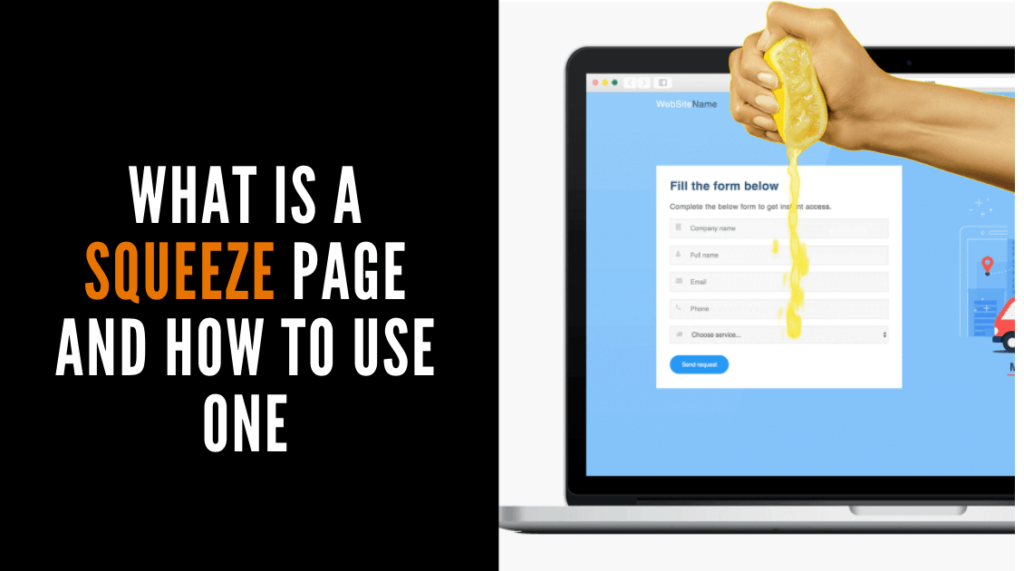
You probably heard about a squeeze page, haven’t you? Maybe you even walked by some without understanding what was going on. Those darn simple, sleek little pages that ask you to give your e-mail address in exchange for something irresistibly looking, like that juicy ebook, discount code, or freebie? Yeah, those are squeeze pages.
Image Source: https://elevate-digital-solutions.com/what-is-a-squeeze-page/
What is it about a squeeze page that makes it distinct and different from the other landing pages? Why do marketers rave about this particular marketing tool? What does it take to create one that practically makes visitors beg to give you their e-mails?
Alright then, let’s break it all down, and when you’re done reading this post by the end, you’re going to know the power of squeeze pages, but you will also learn how to make a squeeze page that makes your leads become lifelong fans.
Okay, buckle up. Grab your cuppa, and let’s dive into the art of making squeeze pages convert crazy.
What is a Squeeze Page?
Imagine hosting a party—a digital one, of course. You have pretty cool content or a product, but there is a catch: you need your guests to RSVP. A squeeze page is the online equivalent to RSVP in the digital marketing world.
This is a form of landing page designed strictly to serve one purpose: to get just that one thing- visitor contact information such as his or her e-mail address. And in return, you offer something of value, a free guide, webinar registration, or special discount- you get the idea, right?
A squeeze page is in a different league from a typical landing page. It has, instead of many CTAs trying to attract the visitor’s attention all at once, but one task to be completed once: get that visitor’s e-mail address. Sometimes the minimal, sometimes the brief, and from everything else that could compete with your offer—from other links to navigation bars—free.
The beauty of a squeeze page is its simplicity: no magic stuff—which is to say, you, your offer, and one prominent, fat CTA.
Squeeze Page vs. Landing Page: What’s the Difference?
Let’s set this straight. Aren’t the squeeze page and landing page more or less the same thing? The answer is no, not even close.
| FEATURE | SQUEEZE PAGE | LANDING PAGE |
| Objective | Collect email addresses | To lead to a direct action (buy, register) |
| Length | Contains minimal content | Can be short or long-form, according to the objective |
| CTA | Typically, one—an email capture-focused one | Multiple CTAs: buy now, learn more, etc. |
| Navigation | Usually, none to limit distractions | May have limited or no navigation |
| Design Complexity | Simple, with one focus | More design elements possible |
Squeeze pages are, by nature, the minimalist landing pages. They don’t want the visitors to drift off and read your blog or click around your website. It’s just that you give us your e-mail, and we’ll give you this thing.
Why Should You Care About Squeeze Pages?
Simple: because they work.
When done right, a squeeze page can dramatically boost your lead generation efforts. Here’s why:
- Laser-Focused Messaging: No noise, no fluff—just a clear, enticing offer.
- More Conversions: Getting rid of extraneous noise—be that navigation bars or social media links, for instance—reduces the chances that visitors will leave.
- Qualifying Your Leads: If someone is willing to give up their e-mail, they’re probably interested in what you have to say, so they make for a warmer lead.
- Helps With Better Targeting: Once you get that valuable email, you can now start building a relationship using targeted and personalized content.
- The Short Version: If you’re about to grow that email list (as you should be), squeeze pages are your new BFF.
Components of a Squeeze Page That Converts Like Crazy
Alright, now that you know what a squeeze page is and how it is absolutely vital, let’s get down and dirty. What are the must-haves that make a squeeze page convert?
You will need:
A Killer Headline:
Your headline is your hook. So it better be the thing that’s going to get people before even reading any more, right? Think of what your offer is-what’s the benefit that your visitor is going to receive? Let it shine through in the headline itself.
- A good squeeze page headline is usually benefit-driven, short and compelling. Here are some examples to help get your killer headline:
- “Get Your Free Guide to 10x Your Social Media Strategy.
- “Unlock 50% Off Your First Order—Just Enter Your E-mail”
- “Download the Ultimate Blogging Toolkit Today”
Observe how each headline immediately lets visitors know what’s in it for them. Be clear, be direct, and make it impossible to resist.
Unbeatable Offer:
Your offer is the carrot that makes your visitor say, “Yep, I want that.” It has to be worthwhile enough so they don’t care giving you their e-mail in return. Try to think about what your audience really wants. Some ideas for your offer:
- Free ebooks, checklists, or guides
- Entrance to a special webinar or series of videos
- Discount or coupon codes
- Access to products or services slightly ahead of time than your competition
Pro tip: If you’re stumped on what to give away, ask yourself this: would you hand over your e-mail for it?
Persuasive Copy:
No novel is needed here. Your squeeze page copy needs to be short, sweet, and to the point. Simply let your visitors know what it is that they are getting, why it’s great, and what’s next (hint: enter their e-mail).
Fast template to follow:
- Problem: Identify the problem your visitor is having, such as: “Having trouble growing your Instagram followers?”
- Solution: Explain how your offer is the solution, for example: “Get our free ebook to 10 times your Instagram growth.”
- Call to Action: Tell them exactly what to do, for example: “Enter your email to get started.”
Don’t make it complicated. The more straightforward your copy is, the higher the chances of them converting.
Clean, distraction-free design:
Remember, a squeeze page is meant to squeeze the visitor into action. Leave off extraneous links, menus, or unrelated offers.
Be minimalist in design: Headline, concise description, a field for e-mail and CTA button.
That’s it. Include a simple, relevant image to support your offer – everything else is a distraction from your motive.
Compelling CTA:
The most important part of your squeeze page is the call-to-action button. That is what will ultimately convince your visitor to convert, so you want it to be something special.
Kill vague phrases like “Submit” or “Click Here.” Use action-filled, benefit-driven CTAs like these:
- Get My Free Guide
- Unlock My Discount
- Send Me the Checklist
Pro tip: That call to action button needs to be light and on a great contrasting color so it doesn’t just disappear on the page.
How to Build a Squeeze Page in 5 Simple Steps
Congratulations. So now that we know what makes it tick, let’s talk about how we build one. Don’t worry-it’s far easier than you probably think. Let’s work through it step by step.
Step 1: Choose a Squeeze Page Builder
Well, you don’t have to turn into some sort of coding wizard to produce a killing squeeze page. With the numerous tools available, creating a squeeze page is just a simple drag-and-drop. Here are some options:
- Leadpages: Great if you’re a newbie. Leadpages has lots and lots of templates.
- ClickFunnels: Good for integrating your squeeze page into a full-fledged sales funnel.
- Unbounce: Really nice for a lot of customization as well as A/B testing.
Choose one that best represents what you think of and at what level.
Step 2: Get a Conversion-Friendly Template
Most squeeze page builders give you optimized templates so a good idea would be to get a template that will be fitting for your style. Later on you will have to change the images as well as the copy into your brand identity.
Step 3: Write Your Headline and Body Copy
Use the copy framework we discussed above: clear headline, short description, and powerful CTA. Keep your offer at the forefront, and don’t forget to be optimized for mobile!
Step 4: Add a Lead Capture Form
Your lead capture form is where the magic happens. Keep it simple: just an e-mail address and, at most, a name. Fewer fields = higher conversion rate.
Step 5: Test and Optimize
Now that your squeeze page is up and live, it is time to test! Run A/B tests on different headlines, CTAs and designs in order to see what works best. Squeeze pages are all about constant optimization.
Best Practices for Squeeze Pages
Before we wrap this up here are a few quick tips to help get your squeeze page to its full potential:
- Test everything: from the headline to the button color. Testing is the secret to a higher conversion.
- Be mobile-friendly. Ensure that your page looks just as great on a smartphone as it does in a desktop.
- Social Proof: Testimonials or short reviews give credibility to your offer.
- Limit choices: Too many options lead to decision fatigue. Keep it simple.