
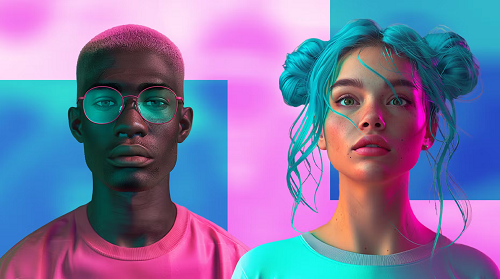
There’s a new breed of influencers on the rise in the world of digital marketing, and they are not humans. High-flying AI-powered virtual beings are blurring real and fake entities like never before. With that, for businesses which are on a constant search for innovation, the boom of these personalities on the screen pulls open a frontier of torrential potential and creativity.
But what do these AI influencers look like, and why are they growing so popular among marketers of every streak? Let’s take a closer look at this phenomenon and find out just what effect virtual beings will have on the future of influence.
Who Are These AI Influencers?
AI influencers are virtual personalities created with advanced computer graphics and AI algorithms. Contrary to classic influencers, real living people, AI influencers are wholly computer-generated; still, they operate with the ability to interact with an audience. Generally made attractive for certain target groups, they usually live a life of their own: wear the latest styles, have an interesting history, and sometimes even have a personality, though being nothing more than code and pixels themselves.
Image Source: https://indianexpress.com/article/technology/artificial-intelligence/aitana-lopez-ai-influencer-instagram-model-9051199/
The idea of Virtual Influencers has been that of a very futuristic nature, but it is relatively new. In one way, shape, or form, it was brought to the fore with the introduction of CGI characters like Lil Miquela, who has amassed a following of one million on her Instagram. Miquela has hyper-realistic features and relatable life moments that make her one of the most recognizable AI influencers. Miquela might unlock the door to a flood of new ones: each would fashion for themselves a niche within the digital space.
What really sets AI influencers apart, however, is that they can be programmed to be flawless: never to age, never to require rest, and never to have bad days. They can be tailored to perfection in the incarnation and representation of a brand’s identity-pretty, much living the dream of a marketer. AI-powered figures, in this instance, will create content and interact with followers, all the while managing to influence buying behaviors without the unpredictability that naturally comes with human influencers.
The Advantages of Virtual Influencers
Why do so many companies flock to AI influencers? For one, control. Traditional influencers can often be a wild card; they oftentimes go off-brand, post scandals, or fall into some kind of personal crisis that might splash damage onto the companies they partner with. Virtual ones, of course, are completely at the beck and call of their creators. Each post, comment, and interaction is carefully crafted so that the brand comes out looking pristine.
Another significant advantage is consistency. Even human influencers are time-bound creatures; at least the people need to rest between posts, go on holidays, or just leave the social media part of life for a while. Virtual influencers never need to rest; their content output can always remain constant. This helps to ensure that the message of the brand remains consistent to their audience.
Moreover, virtual influencers can never be exposed to ethical or personal scandals. AI personas do not lead personal lives; thus, there is no room for bad behavior that could affect a campaign. That kind of stability can be priceless for brands wanting to avoid pitfalls associated with the use of human ambassadors.
Their Impact on Marketing Strategies
Virtual influencers are more than a reaction to a digital novelty; they alter ways of marketing. To this effect, brands have now begun investing in creating their very own virtual influencers or characters that help them promote their products almost effortlessly within their social media environments. These AI characters are not limited by human frailty and, thus, are flexible and scalable means of conducting digital marketing.
Perhaps one of the most striking benefits provided by AI influencers is that of data gathering and processing. Because they operate on the AI platform, they can see precisely how people are engaging with the brand in real time, then structure the content strategies around those success data. This kind of directed and statistical approach does bring better and more efficient forms of marketing in order to dynamically optimize campaigns.
Not only that, but AI influencers engage-literally at the very same time-with diverse cultures, languages, and time zones, something that an organic human influencer would not even dream about attempting. It provides a lot of scalability for interested brands looking to extend their reach overseas-to other countries and continents-without having to onboard dozens of different influencers.
Are AI Influencers Being Deceptive? The Ethical Dilemma
It’s interesting that while marketing goes up with virtual influencers, it’s not without their controversy. According to critics, AI-controlled personalities blur the line between the real and the artificial, hence raising questions of transparency and trust. Is an influencer being deceptive if the audience doesn’t realize they’re dealing with a virtual character?
There is also an issue of authenticity. Human influencers have relationships with their audiences, and that is because they are more relatable; they have flaws, they are imperfect by nature, and they have ups and downs. They build that very relationship with their audience, which feels so real. Virtual influencers, however, have been created perfectly, begging the question of whether this digital persona might have adverse repercussions for consumer mental health in setting unattainable standards of beauty and behavior. The brands must be treading carefully in these ethical waters.
Disclosure that an influencer is, in fact, AI-generated would mitigate the concern, but even transparency cannot take care of the uneasiness hanging over these virtual personalities. Innovation will keep trade in continuous adaptation, and a balance between innovation and authenticity will have to be struck.
Where Do We Go From Here? The Future of Influence
In fact, the rise of AI influencers is just the beginning of the much wider trend of automation and integration of AI in marketing. The line between virtual and real will be further blurred thanks to technological advancements. That’s not so hard to imagine in the future when virtual influencers could become as usual as humans, even coexisting with them in the very same campaigns.
They’re going to be more likely to continue experimenting with AI influencers even further in this space, pushing the boundaries of what is possible in digital marketing. This experiment will range from interactive experiences-where virtual influencers can again be able to communicate with audiences in real time, this time through live streams or just personalized general experience.
But the future does not belong to AI replacing human influencers; rather, it’s about both complementing each other. As a matter of fact, some might even collaborate on hybrid campaigns that simply meld the strength and consistency of AI in scaling campaign messaging with the relatability and authenticity a human influencer provides. It could really open up the best of both worlds in a partnership for much more multifaceted and dynamic marketing strategies.
Industries That Virtual Influencers Work With
- Fashion and Beauty brands were among the first to adopt AI influencers. Shudu, widely named as the world’s very first digital supermodel, ran campaigns for luxury brands and posed on magazine covers. The character of Shudu has been created in order to capture the spirit of high fashion but, at the same time push the limits of what one can do with visual storytelling.
- AI models could be retouched ad infinitum, projecting brands with idealized versions-from blemish-free skin to avant-garde outfits.
- What the AI influencers can allow is versatility, available via fashion and beauty brands, to showcase style and trends in ways that would be otherwise impossible for a human model. Influencers can be digitally ‘dressed’ in outfits, which, in the real world, are impossible, and they can engage in acts that, in real life, involve defying gravity to further enhance the storytelling.
- The industries of gaming and entertainment, however, have also taken special interest in AI influencers. More often than it can be seen, virtual characters are both entertainers in their own shows: part of them have already conducted live streaming of game shows and even music performances. In this way, the concentration of the influencers is on various contents which can blend with coherence in the virtual worlds they are inhabiting. A good example of the latter would be Kizuna AI, one of the leading virtual YouTubers with hundreds of thousands of views, entertaining concepts combined with gaming, music, and live concerts being key to manage to blur the lines between performer and character in ways that are a vision of the future-AI-driven influencers in charge of our screens.
- AI Influencers in Corporate Branding: Today, some brands use AI influencers. They are being pitched as digital ambassadors in the most likable yet highly controlled manner to embody the spirit and foresight of the brand. For example, a virtual influencer may represent a technology brand by showing off this season’s best gadgets and speaking the slang of the youth but providing seamless online integrations for customer service.
- Corporate branding using AI influencers is increasingly growing in appeal, with the ability to engage with customers round the clock, answer queries, promote new products, and even double up as the brand persona on social platforms. All these strategies signify a new wave of brand communication strategies: AI-human interaction.
The rise of AI influences in the space is changing the game inside influencer marketing in ways yet to be entirely comprehended.
To the brand open to innovation, virtual persons offer an ultra-powerful means of getting involved on a really global scale in communication with a control and precision that no human can match. But with this new frontier comes immeasurable digital responsibility.
More importantly, as brands venture into AI influencers, they will have to take a large dose of pragmatism to cross ethical considerations. Authenticity, transparency, and trust would still be required-detracting from any successful marketing plan, even in a world devoid of human influencers.