

How AI Evolved and the Art of Prompting
Artificial Intelligence transitioned from an idea of the future to one that’s significantly influencing the current digital world. Content creation, coding, or perfecting customer interactions to have an effect requires the sort of support given by AI-powered tools such as OpenAI’s GPT models.
But with these tools, ‘the prompt’ matters above all else. It is how you communicate with AI that makes all the difference in quality and relevance.
Welcome to the art and science of GPT prompting techniques, where precision, creativity, and strategy meet in an effort to unlock the full power of AI.
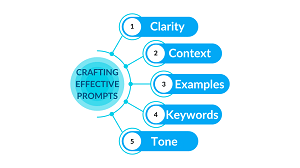
Image Source: https://spotintelligence.com/2023/11/20/gpt-prompt-engineering/
Why It Matters? Understanding the Power of Prompts
Before moving to some of the advanced techniques, let’s answer the more fundamental question: why do prompts matter? In simple terms, a prompt is how you talk to AI. It is the instruction, the question, or the statement you feed the model with in order to direct it to produce the output you want. And not to mention, the clearer and better your prompt is, the better the AI response will be.
Think of AI as a very capable but very literal assistant. The more vague your request, the more general, or even irrelevant, the response you’ll get. A well-framed prompt can get responses that are not only precise but even creative and insightful. This aspect forms the bedrock for efficient GPT prompting.
Anatomy of a Good Prompt
The first thing you want to learn to master GPT prompting techniques is what constitutes a good prompt. Scholars, establishing their findings on such insightful works as “Computation and Language”, report that an excellent prompt typically features the following characteristics:
Clarity:
The prompt should be clear and unambiguous. Avoid vague language or complicated structures that might confuse the AI.
Specificity:
The more specific your prompts, the more accurate the responses will be. It means defining the style, tone, and the content you want.
Context:
Context provides AI with the background and subtlety for understanding a request. That is especially necessary for more complex tasks.
Conciseness:
As if being specific isn’t already substantial, the prompt should also be concise. Too much information can, in fact, lead to an overwrought response from the AI.
Flexibility:
Sometimes, the prompt may need to open up for creativity. It means finding a balance between specificity and flexibility.
Advanced GPT Prompting Techniques
Now, let’s get deeper with the advanced methods and techniques of prompting that can further enhance your interactions with AI.
One of the most potent GPT prompting techniques is iterative prompting. It involves refining prompts along the way depending upon AI responses. You don’t have to start every time with the perfect prompt; instead, you can begin with a general prompt and then progressively refine it as a way of guiding the AI towards what you want to see.
Building Complex Instructions: Prompt Stacking– Prompt stacking allows the combination of two or more prompts or instructions to go into detailed and complex outputs. It is effective when a single prompt is insufficient to cover all aspects of the task.
Example:
Prompt 1: “Explain the importance of clarity in GPT prompts.”
Prompt 2: “Include examples of how specific prompts lead to better AI-generated content.”
This type of stacking will ensure that your AI response is comprehensive in its coverage and logical in its development.
How to Guide AI with Personas: Role-playing Prompts
Role-playing prompts require AI to play a specific role or character. It is useful, especially in situations where you want creativity or a particular tone or style to be adopted.
Example:
Prompt: “You are a seasoned digital marketer. Give a persuasive pitch on why GPT-3 should be used for creating content.”
Therefore, by giving the AI a specific role, the tone, style, and point of view are closer to what one is looking for.
Prompt Engineering: Fine-tuning for Precision
Prompt engineering is a technique whereby great care is taken in the crafting of prompts and their testing in order to get an output as close to what is sought: that it should be as precise and relevant as possible. It may mean trying various wordings, syntax, and structure to see which works best.
Example:
Variant 1: “GPT-3 applications on digital marketing.”
Variant 2: “How does GPT-3 create more appropriate content and strategy for digital marketing?”
Through prompt engineering, you will have a chance to see which of those variants works best and get the nuances so as to apply the technique differently for different tasks.
Including Background Knowledge: Contextual Prompts
The idea is to give the AI more background during the prompt so that it comes up with responses that will not only be as precise as possible but also relevant. It is pretty useful for subject matters that are either complex or specialized in nature.
Example:
Context: “Digital marketing is a field wherein innovation and adaptation must be constant. Among the newest in this arena is GPT-3, an AI model that truly writes like a human.”
Prompt: “With the context given, write an introductory blog post based on how GPT-3 has impacted digital marketing.”
With context, AI will understand the big picture and provide outputs that make sense and are relevant in context.
Real-World Usage of GPT Prompting
Next, let’s take a closer look at how these can be applied in real-world usage to maximize content development and numerous other AI-related skills.
- Content Creation
Through GPT prompting techniques, as a digital marketer or content creator, the aim is to generate materials that will best resonate and work for your audience. You want to create great content without sacrificing too much time in doing so—Master GPT prompting techniques to make this easier.
Example:
Prompt: “Write a 500-word blog post on the benefits of using AI in content marketing, targeting small business owners.”
This could be refined, using some of the methods discussed, into AI content that is informative yet focused for your audience.
- SEO Optimization
SEO is an important concern for digital marketing, and GPT Prompting could well provide considerable support in maximizing your content for search engines. By creating specific keyword- and SEO-strategy-oriented prompts, you are able to come up with higher-ranking content in search results.
Example:
Prompt: “Provide a list of SEO-optimized blog post titles for a digital marketing agency with a focus on AI-driven strategies.”
Refine this to iterate over the prompt, and you’ll end up with a few catchy title options that also work in a search engine-friendly manner.
- Customer Interaction
The use of AI-driven chatbots and voice assistants is rising for customer communication. Master the prompting art of GPT to make communications with customers much more useful, hence more satisfying.
Example:
Use of role-play and context-based prompts, that enable the guidance of AI to respond in a much more helpful and personalized manner for better customer experience.
The Future of GPT Prompting
With the advancement of AI technology, there will also be the development and creation of new prompting techniques. The ability to keep pace depends on a continuous learning and adaptation process. By keeping abreast of the latest research, you will be at liberty to refine your techniques of prompting to stay updated and competitive.
The Path to Mastery
More than the technical ability to elicit the most from GPT, perfecting this skill is also strategic in terms of positioning you as a high-level thought leader in your space; it will ensure that your content really stands out and it takes your marketing to the next level. You’ll be able to make sense of clarity, specificity, and context principles to unlock full AI-powered content creation potential, applying advanced techniques such as Iterative Prompting, Prompt Stacking, and Roleplaying.
As you go further and keep practicing prompting GPT, remember that mastery is a process. The more you practice, the refinement in your techniques will develop, and the more you are capable of unleashing the power of AI to meet your objectives.