

Compared to the most perceived digital marketing a decade ago, ranking success is driven by understanding how to beat Google algorithms. Whether you are an entrepreneur in your small business, a blogger, or simply one who is otherwise fascinated by the mechanics behind search engine rankings, this guide will walk you through most of the essentials. Let’s get started!
How to Beat the Google Algorithms for the Success of Rankings!
The universe of the internet is highly restricting in terms of its visibility battle. To make it big and break into the scene, you have the uphill task of understanding how to get through these complex algorithms that Google applies to rank websites. Algorithms are, in a way, gatekeepers for the internet, thereby dictating which sites should be up on top of SERPs. Thus, how does one beat these algorithms and get ranking success? Let’s check them out.
What Are Google Algorithms?
Google Algorithms are complex result systems that retrieve information from their search index before giving out the best result for the query. Many factors it puts into consideration include keywords, relevance, and user engagement. Think of them as a recipe that Google uses to bake out the perfect cake when it comes to search results.
Why SERP Results are Important
SERPs make the difference between a well-visited website and an invisible one. After all, not many users have the patience to go much beyond the first page. High rankings are hence desirable for maximum visibility and traffic.
Understanding Ranking Factors
Google has over 200 ranking factors that aid the Algorithm in deciding where your page should land on the SERP. Some of these include:
- Content Quality: Is the content useful and informative?
- Backlinks: Does any other good site link to you?
- User Experience: Can your site be navigated easily?
- Mobile-Friendliness: Is Your site compatible with mobile devices?
- Page Speed: Does it load fast?

Keyword Research and Optimization
Keywords are at the heart of SEO. Riding on what people are seeking will help in making relevant content. You could use Google Keyword Planner or Ahrefs to find the best keywords for your niche.
Creating Quality Content
Everything here is about developing quality content. To be informative, engaging, and relevant. Take a conversational tone for more relatability. Imagine explaining something to a friend. That exact level—it’s the simplicity you are aiming to hit.
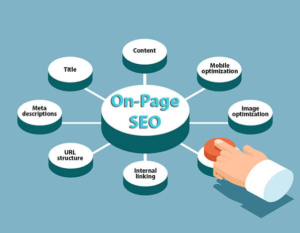
On-Page SEO Techniques
On-page SEO refers to structuring individual pages of a website to rank better and attract more appropriate traffic. Top practices include
- Title Tags: Catchy titles containing the keyword.
- Meta Descriptions: Brief marketable descriptions, including keywords.
- Header Tags: H1, H2, and H3 tags to set up the content format.
- Alt Text for Images: Describe what the images are about and how the search engines would make out your content.

Off-Page SEO Tactics
It covers other activities beyond your website that have consequences on your ranking. The activity includes:
- Backlinks: Get links from quality websites.
- Social Media Marketing: Share your content on social media.
- Guest Blogging: To generate exposure, write guest posts for other websites.
Mobile-Friendliness and User Experience
An increasing number of users are today surfing the internet from their mobile devices than ever. It implies that you should ensure your website is mobile-friendly. Your website has to be responsive and friendly so it could be browsed smoothly on all kinds of devices.
Site Speed and Technical SEO
A slow site infuriates users and damages your rankings. Optimizing its speed: image compressing, CDN implementation, and code minimizing.
How Backlinks Will Help
The backlinks work as if other websites are putting their confidence in you. The more quality backlinks connected to your website, the more Google will have confidence in your site. Backlinks should be obtained from quality sites within your niche.
Keep Updating, Add Fresh Content
Google loves freshness. Keep renewing the old content and sprinkle new posts to stay relevant and engaging.
Keep Tracking and Measuring Performance
Follow-up on how your website is doing by deploying tools like Google Analytics and Google Search Console. The data will help you understand and tell you how and where you must improve.
Some General Mistakes to Avoid
- Keyword Stuffing: It involves loading so many keywords into a website that it actually ends up dropping rankings.
- Cheesing off the Mobile User: The website should be mobile-friendly.
- Poor Quality Content: Focus on the quality rather than the quantity.
- Neglecting the User Experience: The usability of the site is another requirement.
Conclusion
This may sound a bit cliché, but the truth is this: beating the system when it comes to ranking success is not about tricking a system; rather, it involves rinsing out what Google values and giving it to them consistently.
Quality content, relevant keywords, and excellent user experience maximize your opportunity for a high rank in SERPs.
Frequently Asked Questions (FAQs)
How often does Google Algorithm update?
Google Algorithms get updated quite frequently; sometimes this even happens several times a day. Extensive changes and updates are notified several times almost every year.
What is the most crucial ranking factor?
There is no single crucial factor; more to the point, it combines several features like Content Quality, Backlinks, User Experience etc.
Can I pay Google for better rankings?
No, you cannot buy from Google to improve organic search rankings. It’s completely different and has no bearing on organic rankings through paid ads.
How long does it take to see improvements in ranking?
Well, SEO is a long-term strategy. It may take months to nearly a year or so for significant improvements in ranking.
Do social media signals impact SEO?
Although the search signals can be derived directly from social media, what happens is that it can act to drive traffic to your website and increase user engagement, both of which are linked with positive SEO that can benefit your website.