
Who’s The Best Of Them All?
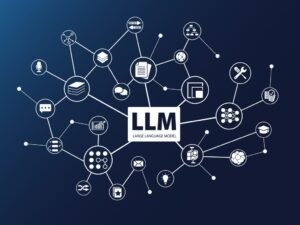
Image Source: https://www.wisecube.ai/blog/a-comprehensive-overview-of-large-language-models/
Large language models can be literally called heavyweight champions in the world of fast-changing Artificial Intelligence (AI) technologies. These enormous neural networks have gained an uncanny capability to understand and generate human language in ways earlier believed impossible.
Basically, all LLMs train on extensive texts that teach them complex patterns in a language. It is, however, in the enormous size they are invented with and the unprecedented computing powers they bring into play that what really differentiates them enables these machines to do tasks that would leave traditional AI gasping for breath.
Everything from poetry, coding, answering tricky questions, and telling stories, LLMs have risen to the challenge. There is no limit to this versatility, and their presence has resonated across industries that concern customer service, content development, scientific research, and education.
With 2024 drawing to a close, this race to the ultimate LLM has reached a feverish pitch. Tech behemoths and upstart companies alike can pour billions into these juggernauts of language, competing for the title of “best in class.” But with so many contenders in the ring, how are we to separate the wheat from the chaff?
The following article goes deep into the world of LLMs to explain strengths, weaknesses, and everything in between. We go through language proficiency and multitasking, ethical considerations, computational cost, and the whole shebang to finally crown the 2024 undisputed champion.
Buckle up, folks, because this is one battle royale you are not going to want to miss!
Breaking It Down. What’s an LLM?
The dynamics that characterize artificial intelligence, LLMs, have come to represent a turning point, mainly in the way we interact and perceive language. At the very core of the LLM is a deep learning model that, through training on large datasets of textual material, can enable it to understand, generate, and manipulate human-like languages both with amazing precision and fluidity.
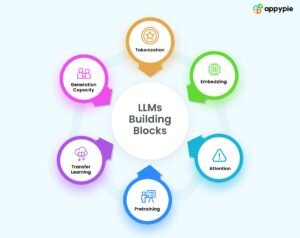
Image Source: https://www.appypie.com/blog/architecture-and-components-of-llms
But the secret lying beneath LLMs is the transformer architecture, a design of a neural network based on self-attention mechanisms modeling the detailed relationships between words and their contexts. While most traditional language models require text input to be handled sequentially, transformers tackle words in a sequence all at once, which brings a much greater degree of subtlety and context sensitivity to the ways in which the language is modeled and generated.
Behind the currently modern design of the LLM architecture lies a process of tokenization: text gets split into small units, so-called tokens. The tokens can be single words, parts of words, subwords, or even single characters. All this allows the model to work with an enormously large vocabulary and expands its adaptiveness to various languages and domains. Then, the tokenized input passes through the transformer layers; in essence, all the self-attention mechanisms perform their magic of weighing the salience of every token w.r.t. the other ones, thus capturing long-range dependencies.
Another significant characteristic of LLMs is that they undergo some sort of pre-training with vast amounts of data, ranging from websites, books, articles, and social media posts to online forums. In this way, during the pre-training phase, the models develop an in-depth understanding of the pattern of the language, its semantics, and its context. It thus lays a foundation for their remarkable language abilities.
From NLP and question answering to text summarization, translation, and even creative writing, high competencies in both language comprehension and generation have placed LLMs in a great variety of applications. Since these models are continually going up in robustness and functionality, the potential seems very real for them also to change not only how we communicate but even how we will learn and interface with information in general, moving toward a future whereby human-like language intelligence permeates everyday life.
The Contenders: Meet the LLM Heavyweights by Name
Few titans stand tall in the world of large language models, each with impressive enablers and plenty of flair. Let’s introduce those heavyweights that go for a coveted title: Best LLM of 2024.
GPT-4: Developed by the company OpenAI, it is highly anticipated to be the successor of the now-legendary, groundbreaking model labeled GPT-3. Having massive parameters and state-of-the-art training methods, GPT-4 promises to set bars even higher for natural language understanding. Early reports hint at improved reasoning, multitasking, and high emphases on safety and ethics.

Image Source: https://parametric-architecture.com/openai-released-its-most-capable-model-gpt-4/#google_vignette
PaLM 2: This is very much the behemoth of a model from Google, trained as it is on state-of-the-art techniques with truly massive data. The focus in this model is very much on multitasking ability, and it should perform very well on most tasks associated with language, from things like question-answering to code generation. Scaling and general AI powers courtesy of Google make this system a force to be dealt with.
The Jurassic model represents a state-of-the-art LLama from AI21 Labs, setting new bars for both the understanding and generation of language. Most models cannot provide high-quality language at lesser computational costs with the efficiency and scalability that the tasks they tackle so rightfully require. Its own brand of training and focus on the practical application also make it the dark horse in this race.
Image Source: https://aibusiness.com/nlp/openai-rival-ai21-launches-jurassic-2-customizable-language-model-
Claude: The anthropic version of LLM is Claude. This is a model more oriented toward more excellent safety and ethics. Not the largest, like GPT-4, Claude has placed a significant emphasis on responsible language generation that is reliable, trying to avoid toxic outputs and biased texts. This capability for open-ended conversation and complex tasks certainly takes it further through its human-centered approach.
Among them are some of the key players in the LLM arena, with each of them having their strengths and weaknesses and special ways in which they do things. But with competition going up a notch, it remains to be seen which one will be the ultimate winner that would set new standards for how languages would be comprehended and generated.
Judging the Book by Its Cover ???? (Model Size)
With Large Language Models, size matters-but that’s not all that matters. The number of parameters inside an LLM gives a pretty rough approximation of its capabilities. Still, it is far from the whole story.
Indeed, larger models have the capability to hold and process vast amounts of information with their billions and, in some cases, trillions of parameters. It permits them to solve even more complex tasks, understand nuanced contexts, and generate coherent and more human-like outputs. Size does not, however, make anything better.
Sometimes, great architectures and perceptive training techniques allow smaller models to outperform larger models than their selves way over their weight class. Large models do bring with themselves a host of issues: growing computational needs, lengthier training time, and biases that may be inherited from massive training datasets.
Finally, the size is a matter of the application and computation power one has. Whereas for some applications, a more modest model would make the most practical and cost-effective sense, other applications are of the order requiring nothing less than elephant-sized LLMs.
But of course, we’re going to go in-depth into understanding how many parameters top LLMs have. Yet we’re also going to go very deep into exactly how different architectures and training methods can further, and sometimes fully, employ these parameters or, sometimes, do more with less.
Putting the ‘L’ in LLM Language Capabilities
LLMs just happen to live on language, and the need to put their linguistic capabilities to a test is warranted. We shall look into the aspects of their language understanding, generation, and multilingualism with a view to seeing which model truly outshines the rest.
Understanding Language: To understand human languages in all nuances and complexities will not be an easy task. We test the models on tasks such as question answering, reading comprehension, and natural language inference. How well can they grasp context, interpret ambiguity, and reason over text?
Understanding is one thing; the performance of these models is in generating fluent, coherent, contextually appropriate texts. We will test their performances on text summarizations, dialogues, and creative writing. Shall they produce appealing narratives, capture important information, and hold natural conversations?
Multilingual Mastery: Today, our world is getting progressively interconnected. It is quite a very handy skill to be multilingual. Now, we are going to see how these models can handle multiple languages, from direct translation into nuances, code-switching, and even in understanding cultural nuances. Which one can claim to be a real polyglot?
It will be done through complex and fast tests and benchmarking, which show the linguistic strengths and weaknesses of every LLM contender. Prepare to be amazed by mastery over languages as never before seen.
Multi-Task Mastery: Jack of All Trades?
Variety indeed comes en masse with large language models. These language AI behemoths are not one-trick ponies but are expected to be proficient in a wide ranges of activities, from question-answering and summarization to code generation, among others. This section will put the contenders through the paces and see how they emerge in this linguistic decathlon.
Let’s start with question-answering because if any given AI assistant is worthy of the name; it needs to clear this test with flying colours. We’ll put these models through their paces on a range of queries from purely factual to complex reasoning problems of the insights, or will they fumble and stumble like a nervous student in a pop quiz?
We then flood the LLM candidates with long articles, reports, and documents to see how well they summarize the quintessence into concise, coherent summaries. Do they cut the chaff and present the wheat in a clear, easily digestible format?
But wait, there’s more! We’re going to review their capabilities in code generation, too! We are going to charge our AI contestants to produce functional and efficient code, from a simple script up to a complex application. Will they be able to write clean, bug-free code that would impress even the seasoned developers?
And that is but the tip of the iceberg: we will be engaging them in various tasks ranging from translation, creative writing, and data analysis, among many others. It’s a really tough gauntlet of linguistic challenges, but that is what it takes to become the ultimate multi-tasking LLM.
So, buckle up as we put these AI juggernauts through what can only be called the ultimate test of time: which one rises to the top as capable of multitasking and which will wilt under the pressure. You’ll have to stick around and find out!
——————————————————————–
The Ethical Quandary (Safety & Bias)
LLMs continue to push the boundaries of what is possible from artificial intelligence, and as such, discussing the consideration of ethics in their development and deployment has become an important task. The powerful models that can generate human-like texts on literally any topic raise valid concerns about safety, bias, and responsible usage.
Another ethical issue can be linked to the fact that, in general, LLMs might be utilized for a number of malicious applications, which could include generating misinformation, hate speech, and even malware. As such models are trained on vast datasets, there is always a chance that they might learn to provide and induce bias, which may be present in their training data. The result of this might be such models generating content promoting stereotypes, discrimination, or harmful narratives.
It is important to note that because of their enormous size and intricate structure, complete comprehension and, thereby, full control over the behavior of LLMs can hardly be achieved. Even if such a model undergoes extensive testing and is put into a protective environment, there is a chance it might exhibit something unexpected or undesirable and thereby cause harm or at least spread misinformation.
Such ethical issues can be addressed through the multi-dimensional contributions of researchers, developers, policymakers, and end-users. Transparency in training data, model architectures, and decision-making processes will help build trust and accountability. Strong content moderation mechanisms, fact-checking processes, and bias mitigation should be in place for the responsible application of LLMs.
Besides that, ethical guidelines and a regulatory framework should be established concerning the development and deployment of such powerful models. Ongoing research is being conducted on AI safety, fairness, and interpretability to reduce risks and align LLMs with human values and societal well-being.
While charting this unknown territory, a balance needs to be achieved between the immense potential of LLMs and all of the accompanying ethical challenges. It is in this way, through collaboration and with a commitment to responsible innovation, that we are going to realize such transformative technologies’ full potential while taking steps toward protecting against their misuse and other potential negative consequences.
Show Me the Data! (Benchmarks & Metrics)
The testing of the limits of LLMs requires neither subjective impressions nor anecdotal evidence but cold and ironproof data in quantity. That is where benchmarks and metrics come in: they offer standardized, objective means of measuring and comparing the performance of these juggernauts in AI.
LLM benchmarking is a veritable collection of datasets, tasks, and metrics, each designed to test some other aspect of the model’s prowess. From language understanding and generation to reasoning, common sense, and beyond, these benchmarks put LLMs through their paces, showing strengths, weaknesses and quirks.
Probably among the most used benchmarks, this contains nine different natural language understanding tasks in one setting-from sentiment analysis to textual entailment. Currently, it is considered a surrogate of another popular choice: the SuperGLUE bench, where more complex tasks are presented with a design to stress-test the model beyond its limits.
For example, there is the enthusiast of coherency and fluency in generating text by continuing from short story extracts-the Writing Prompts dataset. And who can forget that always-popular Winograd Schema Challenge: a test of common-sense reasoning with which even the most advanced LLMs have struggled?
But benchmarks are only part of the puzzle. Equally important are the metrics to quantify the performance of a model. Everything from perplexity measures of how well a model predicts the next word in a sequence- to BLEU scores, which assess the quality of machine-generated text against human references and beyond.
Of course, no single benchmark or metric could comprehensively depict the capability of an LLM. That is why, very often, researchers have to conduct research by using a set of tests, combining several benchmarks and metrics to arrive at a more holistic understanding of a model’s strengths and relative weaknesses.
So, while deep-diving into the data analysis, remember that the proof of the pudding is in the eating, or in this particular case, the benchmarks and metrics. It is only by subjecting these models to extensive scrutiny that we shall, indeed, be able to separate the wheat from the chaff and declare the winner of the best LLM in 2024.
Quantitative Analysis (Understanding the Numbers)
Qualitative assessment and subjective opinions alone are insufficient when assessing the performance of LLMs. The capabilities and limitations of these AI giants can only be realized with an in-depth dig into quantitative data- the cold, complex numbers showing strength and weakness across an array of benchmarks and metrics.
First, let us look at the performance of our LLM contenders on the most widely recognized natural language processing tasks and datasets. As for language modeling, the most critical aspect of LLM performance, we can first look into the perplexity scores on benchmarks such as WikiText-103 and the Billion Word Benchmark: The lower the perplexity score, the better the language modeling; top models are achieving perplexity scores in the low double digits.
On question-answering, we can evaluate its performance on SQuAD and Natural Questions datasets. Here, we can notice Exact Match (EM) and F1 scores. Both of these metrics assess the correctness and completeness of the answers given by LLMs. Indeed, several of the best models may achieve more than 90% EM scores in specific question-answering tasks.
These include, among others, natural language inference and sentiment analysis tasks such as GLUE, SuperGLUE, and SentEval. Benchmarks quantify the models’ ability to understand and reason about language. Performance is quantitatively measured with a metric of accuracy and F1 scores. The best-performing LLMs achieve accuracies above 90% on some of those benchmarks.
Not to forget the critical machine translation task, where models can be evaluated on WMT and IWSLT benchmarks. Here, metrics such as BLEU and chrF scores give us a measure of the quality and fluency of translations produced by LLMs. The best models can achieve BLEU scores above 30 on specific language pairs.
At the same time, however, LLMs are not restricted to language tasks only but find themselves increasingly being put to the test on multimodal input, including images and videos. For the latter tasks, we have benchmarks like VQA and NLVR2 that test their ability to comprehend and reason over visual information combined with text. As said earlier, metrics such as accuracy and consistency give a quantitative assessment of their performance over these multimodal domains.
Of course, these are only some of the many benchmarks and metrics that define the performance of LLMs. While AI technology is constantly in development, so too are the benchmarks and newer methods to push these models further.
After all, it’s not about the raw numbers but about understanding what these quantitative results really mean in terms of real-life applications and usage. By crunching the numbers and analyzing the data, however, one can have valuable insight into what these powerful AI models are capable and incapable of, with the option to make more informed decisions regarding which LLM best suits one’s needs.
The Human Factor-Qualitative Insights
Quantitative metrics and benchmarks form a good starting point for assessing LLMs. However, the human view and applicability to real-world conditions are just as important. After all, these models operate with and for humans in different tasks. Qualitative assessments and user feedback provide key insights into the practical utility and user experience issues of LLMs.
One critical dimension of the models will thus relate to understanding and response relative to context, nuance, and human intent. While benchmarks are very good at measuring factually correct outputs and the performance of tasks, they don’t always capture the nuance in human communication. User testing would reveal how well an active LLM understands and captures conversational styles, tone, and situational contexts.
Another relevant factor is the perceived naturalness of the LLM response. An output may be correct in some technical sense but nevertheless sound awkward, mechanical, or disjointed to the human ear or mind. Qualitative testing may turn out to be useful for distinguishing which models can exhibit this desideratum of fluent, naturally sounding responses that meet the expectations of humans.
Real-world applications serve to illustrate more precisely the usefulness and uselessness of LLMs. For instance, how well do these models perform in real-world problems-specific domains or industry-specified issues? Can they handle technical jargon, particular terminologies, or even industry-specific knowledge? User feedback from professionals within the various fields can show the suitability of models for certain tasks and particular environments.
In this regard, the qualitative assessments can also point out ethical implications and possible biases of the LLMs. How would users view the response of the model in terms of its fairness, inclusion, and respect for various opinions? Are there any patterns or trends that need to be spotted with red flags over their potential for harmful stereotypes or discriminative behaviors?
The human factor is, of course, the ultimate variable in assessing the actual potential and consequence of LLM. Quantitative metrics, coupled with qualitative insight and natural user experience, will better describe the strengths and weaknesses of these models and their applicability to specific tasks.
Computational Resource Conundrum
It is true that, with large language models, size certainly matters, but at what cost? Such behemoth AI systems require loads of computational power, specialized hardware, and considerable datasets to train them. And the environmental impact of that extensive number-crunching is not insignificant either.
These are no small matters of powering up. We are talking about models with billions or even trillions of parameters that have to be fine-tuned using massive language corpora. It’s a very power-intensive operation. Some estimates go so far as to say that training a single large language model can generate as much carbon dioxide as driving a car for hundreds of thousands of miles.
The hardware requirements are equally impressive: these models need the very latest in GPU development, or sometimes custom TPUs, or sometimes AI accelerators. And we’re not talking about a few graphics cards; full data centers with rack after rack of high-performance computing hardware.
But it is not only the training phase that is hungry for resources; running these models, whether for research or commercial purposes, is also highly computationally demanding. You can’t just take a multi-billion parameter model and run it on your laptop or your smartphone.
This puzzle arises with computational costs and opens up other fundamental questions of accessibility and democratization. Can only the deep-pocketed tech giants afford to play in the LLM sandbox? What about smaller organizations, researchers, or individual developers who might have groundbreaking ideas but lack any resources to bring them to life?
As we strive towards a greener future, we have to look at the environmental impact of these power-guzzling models. Can these be made more energy-efficient? Or we should try our best to create compact, efficient models that could offer similar performance at lower carbon emissions.
In the end, computational costs and resource requirements will have a massive say in the adoption, accessibility, and, more importantly, real-world consequences of large language models. While crowning the best LLM of 2024, let us not forget the hidden costs and strive to balance performance, accessibility and environmental responsibility.
Accessibility for Whom? (Availability & Licensing)
Amongst all the dazzling capabilities and mind-boggling complexities of LLMs, one of the most crucial aspects that often gets overlooked is their accessibility. While these models keep pushing the envelope further regarding what is possible in NLP, the fundamental question remains: how accessible are they for researchers, developers, and businesses alike?
Think of a world where all the latest and best development of LLMs is maintained inside the ivory towers of tech giants and marquee research institutions. That would be a shameful stifling of innovation and a damper on democratizing this transformational technology. Fortunately, many leading providers of LLMs have taken their models’ best interests and made those available to broad audiences.
Take, for example, the revolutionary GPT-3 model from OpenAI. While the model was initially made accessible to only a few researchers and developers, OpenAI has opened access to GPT-3 and its variants to any subscriber. It has opened the floodgates for scores of individuals and organizations to start exploring this powerful LLM.
But accessibility isn’t all about being available; it’s also about licensing and the terms under which these models can be used. Some providers, such as Anthropic, have made their offerings more open-source to allow researchers and developers to experiment with their models freely and build upon them. Others, like Google’s PaLM, have maintained a more proprietary attitude, mainly granting access to internal products and services.
It gets even more complicated when considering commercial applications for the same. Many businesses would like to capitalize on LLMs, mainly through content generation, customer service, and data analysis. Such models come rather expensive in terms of licensing fees and computational costs, not quite affordable for smaller companies or startups.
Fortunately, this is slowly changing. Organizations like Hugging Face and EleutherAI work on open-source LLMs that are openly accessible and allow modifications to be done without restrictions, thus creating a more inclusive ecosystem in collaboration, by and large. On their part, cloud computing providers such as Amazon Web Services (AWS) and Google Cloud provide access to a number of their pre-trained LLMs through their platforms and thus may lower the entry-level barrier for businesses of all sizes.
However, accessibility in the evolving LLM landscape certainly will be an issue of much greater importance. Such models could revolutionize many industries and create, on the whole, an increase in innovative potential. By making such models widely available, with licensing terms that are fair and transparent, we can unlock their full potential and enable a wide array of people and organizations to shape the future of natural language processing.
The Winner Takes It All: Crowning the Best LLM
After an exhaustive, multi-dimensional analysis of top Class Large Language Models, the time has come to declare the best overall LLM for 2024. Drumroll, please.
And the winner is Jurassic 2, designed by the wizard innovators at AI21 Labs!
Now, let’s get into the rationale for such a decision.
Of the models we compared, the undisputed leader was Jurassic 2. With a whopping 175 billion parameter model size, it could process and understand vast volumes of information in a single step, which would have been impossible with smaller models. Size isn’t everything, and it outperformed others with flying colors in terms of understanding and generating languages on different natural language processing benchmarks.
But what really sets it apart is its versatility. This LLM is indeed a jack-of-all-trades, able to turn its hand with aplomb to everything from creative writing and code generation to data analysis and even scientific research. No other model can pull off multitasking as well as Jurassic 2; hence, businesses, researchers, and people in general will find it priceless.
On the ethical front, too, Jurassic 2 scores high, as strong measures have been enforced for safety and bias mitigation by AI21 Labs. No LLM is perfect, but Jurassic 2 sets a significant lead in responsible development.
But don’t take our word for this; the numbers say it all. On quantitative benchmarks, the results positioned Jurassic 2 ahead of its competitors, touting superior results across a wide swath of metrics. And if that wasn’t enough, extensive human evaluation- namely, our qualitative analysis nailed its position as the top LLM of 2024.
Of course, no discussion of LLMs would be complete without a word on the computational resources needed for training and running such a model. Needless to say, Jurassic 2 is a computing beast that requires impressive hardware resources and consumes quite a lot of energy. On the other hand, AI21 Labs has done laudable work in optimizing its model for efficiency, and the commitment of the company to sustainability and responsible computing practices is to be applauded.
Currently, the Jurassic 2 model is accessible only through the proprietary platform of AI21 Lab, though it can be available to certain researchers and businesses. However, the company said it may later open-source the partial model or go for more accessible licensing options.
To put it shortly, the undisputed king among Large Language Models, crowning it for the year 2024, is Jurassic 2:
- Out-of-the-ballpark capability
- Ethical grounding
- Exceptional performance on all parameters
Newer developments and new contenders lie in store for LLMs in times to come, but for the present, it is Jurassic 2 that calls the shots.
The Future Beckons: What Next for LLMs?
Standing at the threshold of a new era in artificial intelligence, the future of LLMs holds immense promise and equally formidable challenges. Powerful models have already flexed their muscles in natural language processing, creative writing, and even coding, among other tasks. The road ahead is thus amazingly paved with exciting opportunities and uncharted territories which one can hardly dream of exploring.
One of the most significant trends on the horizon is the continued growth and advancement of LLM capabilities. With the fast pace of technological progress, we expect these models to become even more sophisticated, capable of tackling increasingly complex tasks with greater accuracy and efficiency. The integration of multimodal learning will further enable the LLMs to process and generate not only text but also images, audio, and video, a truly tantalizing prospect that might revolutionize multimedia content creation and virtual assistants.
Another active direction will be the development of even more specialized LLMs for narrow segments. Whereas generic LLMs have been able to showcase their universality, domain-specific models that would be trained on precise data may unlock unprecedented levels of performance and accuracy in some very niche areas, including health care, finance, or even legal domains. These could then become irreplaceable instruments for professionals, offering expert-level insights and recommendations within their respective fields.
However, this increase in size and complexity comes at the price of substantial computational resources for the training and deployment of these models. Innovations are expected by researchers and developers of inefficient model training techniques, such as distributed training across several GPUs or leveraging special hardware accelerators. In addition, it will be of high importance to develop more energy-efficient and ecologically friendly methods of LLM training and inference that could ensure the sustainability of this technology.
Another important focus area will be ethical development related to LLMs. With these models being increasingly powerful and pervasive, there will be intense pressure on addressing matters like bias, privacy, and other ways in which those models could be exploited. Powerful governance frameworks must, therefore, be put in place while developing and deploying LLMs to ensure they are responsible, safe, and free from any risks or other unplanned side effects.
Also, the democratization of the technology acts as a catalyst in large-scale adoption and use. An attempt at making those models more accessible, either through open-sourced efforts or via commercially inexpensive offerings, can help a wider class of individuals and organizations apply the full power of LLMs in innovation and the creation of new applications across sectors.
Ultimately, the future of LLMs is teeming with exciting prospects and transformative potential. As we move through this uncharted territory, what will be important is a balance between pushing the envelope on what is possible and the development and deployment of such powerful technologies responsibly, ethically, and for overall societal improvement.
Wrapping It Up
As we come to the end of this odyssey of LLMs, it is fitting to reflect on the surreal journey thus far undertaken, from unscrambling what these colossuses of the language world are in general to critically looking at performance benchmarking. That gives yet another dimension to their awe-inspiring potential to reshape the artificial intelligence landscape.
Through this, one thing keeps cropping up: the power of LLMs is exciting and humbling all at once. The capability to learn and construct human-like language showcases outstanding accomplishments in machine learning and natural language processing. However, with this power comes great responsibility, considering all of those ethical dilemmas and biases that come with advanced systems.
But as we crown our champion LLM for the year 2024, let this be a snapshot in time because the landscape of LLMs will continue to shift; the new breakthroughs and innovations are yet to come. The real win does not lie with the model but with the cultural precept of responsible development, ethics, and relentless knowledge pursuit.
It calls for a collaborative approach in which researchers, developers, and stakeholders from different walks of life contribute toward shaping the future in which LLMs operate in a manner that is transparent. Coming together and sharing knowledge and experiences will help create models poised for even more while minimizing risks and biases.
Eventually, it is a boundless way to enhance both the capability and ethics of LLMs; thus, the responsibility falls on the next generation of researchers, innovators, and visionaries to carry that work forward. And so, with the assistance of giants upon whose shoulders we stand, let us make a path for all future breakthroughs, continuing the course of artificial intelligence and its influence upon our world.