

Customer Data Platforms provide vital differentiators. We all agree that we’re constantly bombarded with social media updates, round-the-clock emails, messages, and advertisements. It’s become challenging to outshine in this crowd. Any brand offering customized and relevant experiences quickly becomes top-of-mind to customers. These personalized experiences are vital differentiators for the business.
It is here that Customer Data Platforms play essential roles.
Customer Data Platforms (CDPs) have transformed how organizations collect, analyze, and exploit customer data to create personalized marketing campaigns that users can relate to. The global market is forecasted to reach around $19.7 billion by 2027.

Personalization is Data
Let us understand how vital personalization is. A report reveals that –
- Eighty-eight per cent of users value company experience in the industry just as much as its products and services
- Seventy-three per cent want businesses to foresee their particular needs and expectations
- Sixty-two per cent expect the company to predict their needs
The above report indicates that generic campaigns are passé. Customized marketing campaigns driven by customer data platforms can boost customer retention and conversions.
Shopping online means people may take various actions before buying. The navigational map is very dynamic. They may jump from one device to another or visit other pages within your app. Customer Data Platforms help interpret all these dynamic actions into valuable information, which can be utilized by various teams, such as sales, marketing, and customer service, to deliver individualized experiences.
The Power of Customer Data Platforms
Customer data platforms gather and organize data from different channels and sources, such as Customer Relationship Management systems, marketing automation tools, e-commerce stations, social media, emails, websites, and more. CDP is a centralized storage system that gives marketers a broad spectrum of customers’ interactions and behaviors with a particular brand. With this wealth of exhaustive data, businesses can strategize to design their strategies with the right message to reach the right audience at the right time.
CDPs can also predict the best next move with a particular customer or customer segment. It allows businesses the leeway for their next move to convert or hold back specific customers.
A CDP also provides the customer service team insights for providing better customer support.
However, one of the CDP’s biggest strengths is enabling effective customer contact, or ‘granular personalization.’
CDP in Marketing
Consolidated Consumer Profile
A CDP collates data from various application touchpoints to create an integrated customer profile. It displays an understanding of customers’ interaction with your brand, from click-throughs to check-outs, customer service requests to emails, and more. It is a complete analysis of the customer, allowing marketers to understand consumer preferences and behaviors across various channels. The data consolidation helps multiple teams within the organization to develop products, services, or experiences to engage users beyond traditional customization. The aim is to make meaningful and relevant interactions, enhancing user satisfaction and engagement.
Segmentation And Targeting
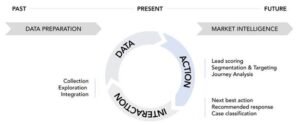
Customer segmentation is one vital aspect of personalized marketing. CDP segregates the target audience into easily distinguishable groups or segments depending on shared characteristics, preferences, behaviors, or other attributes. Brands can target these segments with tailored marketing messages, content, or offers designed for their needs and interests. It is this power of customer data platforms that helps marketers today.
“Customer data platforms are the cornerstone of data-driven marketing strategies, enabling organizations to harness the power of their data to deliver personalized and meaningful experiences to customers across channels.” – Doug Laney, renowned data scientist.
Personalizing Messages
Is dynamically changing the website for each customer possible? Yes, this is where Customer Data Platforms come in. They analyze data and past interactions and empower marketers with tailored suggestions to craft personalized messages based on customer preferences and behavior. They also suggest which digital channels to use—email, push notifications, in-app messages, or SMS—to boost overall customer engagement.
Real-Time Customer Engagement
High-end customer data platforms have real-time capabilities, allowing marketers to engage with their users at the moment of intent. Real-time data updates ensure that brands run timely and relevant campaigns.
Some platforms have a custom in-memory database that allows millions of user profiles to be queried in real-time without any pre-computation. It means marketers can get answers to queries that span millions of data points in real-time, right when required.
Predict What They Want
User behavior is dynamic. However, with the help of predictive analytics, the Customer Data Platforms can generate recommendations for each customer segment, including suggesting the right channel to use, the appropriate time to launch a campaign, the perfect frequency of sending messages, and the ultimate offers to send them.
Anticipative analytics help identify trends and patterns in customer behaviour, such as shifts in preference or even sentiment toward your brand. They can also forecast future customer behaviour, like their likelihood of purchasing or dropping off. These predictions help marketers optimize their marketing strategies and allocate resources more efficiently.
A well-known TV channel used the customer data platform’s ‘Best Time’ recommendation and saw a 60% surge in click-through rates and a 20% growth in its in-app conversion rate.
Customer Data Platform Capabilities
A robust customer data platform should be easy to use and integrate, compatible with the rest of your marketing technology stack, and strong enough to utilize the volume of customer data you deal with.
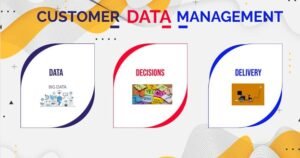
Nowadays, companies are providing software designed to give the benefits of a CDP and delivery system on a single platform. It is a 360-degree customer view and actionable insights in real-time. To help marketing and sales teams better understand their users, segment them effectively, and reach out to them with contextual messaging in real-time. These platforms attempt to unify customer data, decision, and omnichannel delivery systems.
How To Use Customer Data Platforms to Create Amazing Experiences
An overall view of every customer is a concept that has eluded businesses for decades. Breaking isolated data sets and furnishing a consistent customer experience remains a priority. However, some intelligent brands have been able to put it into practice.
According to a Forbes survey
- 47% of marketers take a week or more to analyze and measure the success of their marketing campaigns.
- Another 47% usually takes between 3 to 5 days.
That’s a massive window of lost opportunity to immediately improve a customer’s experience.
The capability to make customer data actionable so marketers can send out the most exciting offers needs to be included. A total picture of the customer journey and a method to make that insight available for analysis are required.
What is missing?
A customer data platform (CDP) unifies customer data into a single continuous database that can be shared with other systems. It, in turn, allows businesses to create a complete view of customers and formulate better customer experiences.
Challenge: Many companies face the current challenge with their customer database: data silos often arise when various departments or teams within an organization use different software systems, databases, or tools to collect, store, and manage data. And more often than not, the data is inaccessible when needed for more strategic campaigns. Marketers need help integrating offline and online data and feel that “access to data” is a significant obstacle to making personalization a greater priority.
Components of A Customer Data Platform
A CDP is part of a customer data management system with three core components: Data, Decisions, and Delivery.
Many organizations prioritize CDP as one of their top marketing investments. A recent study revealed that 78% of companies are developing a customer data platform. More and more companies are implementing systems to unify data and connect their data sources to a unified customer database, marketing automation, or CRM platform.
Advantages of Customer Data Platform
A full-service CDP has numerous advantages for businesses:
- Data-driven Engagement: Marketers can access previously inaccessible data and improve their audience segmentations and personalizations.
- Measurability: With a total view of the customer journey, marketing teams can build the right metrics for acquisitions and conversions. It helps them determine ways to enhance their marketing campaigns.
- Improved ROI: Preferred actions, channels, and time to reach customers give marketers ample opportunities to remain competitive. It offers better budgeting avenues and optimizes campaign costs for improved ROI.
CDP for End-to-end Customer Experience
CDP has become integral to the marketing technology software and tools of future-looking brands who wish to create an end-to-end customer experience.
Integrating Data From Online and Offline Sources:
CDP integrates user data from online and offline applications in real-time. Software development kits track user actions across devices and channels. It includes individual-level data from websites, mobile browsers, and mobile apps. Custom fields for consumer profiles are unlimited and can consist of event-level behavioral fields specific to one’s business.
Open API:
The advanced feature of CDP’s Open API allows marketers to push user-profiles and event data from any source into their system. Data from all online and offline applications can be put in one place. User-level and transactional data, such as payments or purchases, and behavioral data, such as frequency of visits, can also be easily stored.
Creating Unified User Profiles:
CDPs generally store user profile data and do not change user identity while migrating data from numerous channels. It establishes one profile per user across all devices.
1.CDP mainly identifies consumer profiles with a database ID or other unique identifier captured or generated. The same identifier across devices allows for device aggregation in CDP.
2.Users can track every pattern or change in customer behavior and traits over time and across all channels.
3.Any changes in a profile are maintained regardless of whether they remain present in the source systems. Changes in demographic attributes such as postal address and email or more behavioral patterns such as search history, purchase trends, or interests are maintained.
Real-time Analytics, Segmentation and Personalization:
A key feature businesses benefit from CDP is its in-memory database. The database stores and accesses the most recent snapshot of user data, and any changes that happen to it are rendered in real-time.
A custom-built in-memory database also allows for the real-time query of millions of user profiles, an advanced analytics and segmentation tool for growth marketers.
The customer data platform can also have an integrated Message Delivery Service (MDS) that greatly complements its customer data capability. Message delivery systems are end-to-end, omnichannel orchestration and marketing automation systems. They make understandings from the analytics and segmentation engine actionable.
Data Privacy
CDP keeps a current view of customers to maintain the accuracy of the user profile. Customer data is kept in an encoded format optimized for performance rather than in a traditional file system or a database.
Customer data has been growing exponentially. CDPs are built to meet future volume, variety, speed, and integrity needs.